Graphic design is no longer a finishing touch on the marketing plan. In 2026 it is the surface where your brand meets every customer, on a phone screen, a packaging label, an ad, a pitch deck or a storefront. The businesses that grow fastest treat design as a system, not a series of one-off assets.
Working with a modern graphic design company or creative agency gives you more than pretty visuals. You get a visual identity that is recognisable across channels, backed by clear brand guidelines your teams can actually follow. Below are the trends and practices every founder, marketing lead and product owner should understand before commissioning their next branding project.
Why Design Matters for Business
Customers form an opinion about a brand within seconds. A polished, consistent look signals that a business is serious, established and safe to buy from. A weak or inconsistent one raises doubt, no matter how strong the product is behind it.
- Consistent design increases perceived value and pricing power
- Strong branding shortens sales cycles by building instant trust
- Recognisable visuals lift ad performance and reduce paid media cost
- A clear system helps internal teams ship faster without design bottlenecks
Modern Graphic Design Trends
The best work in 2026 is quiet, confident and system-driven. Trends are less about gimmicks and more about clarity, motion and thoughtful typography.
- Bold, editorial typography used as the hero element instead of stock imagery.
- Minimal brand systems with a tight color palette, generous white space and a small set of reusable components.
- Motion-driven identities where logos, transitions and micro-animations are part of the brand, not decoration.
- Illustration and 3D used to give SaaS and technology brands a warmer, more human personality.
- AI-assisted asset generation for on-brand variants at scale, guided by strict design tokens and human review.
- Accessible color and contrast as a default, not an afterthought.
Brand Identity and Visual Systems
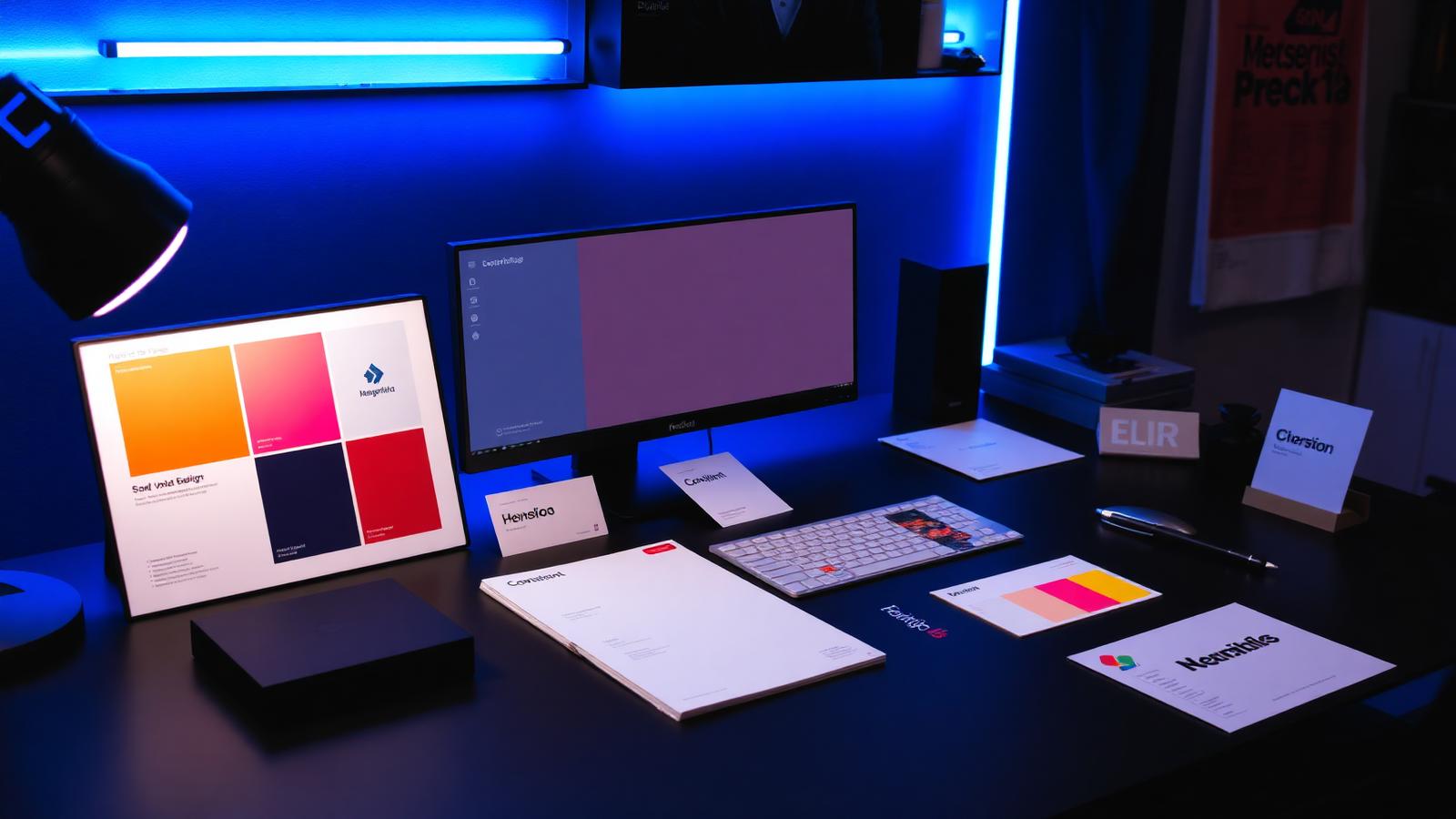
Brand identity design is the foundation everything else sits on. Instead of designing one logo and hoping for the best, modern brands invest in a full visual system: logo family, color tokens, typography scale, iconography, imagery style, motion principles and clear usage rules.
- Primary and secondary logos with clear space and minimum size rules
- Color tokens for light and dark backgrounds, with accessibility ratios documented
- A typography scale that works from a mobile caption to a billboard headline
- Photography and illustration direction so third parties stay on brand
- A living brand guidelines document that ships with real examples
Logo Design in 2026
Logo design today is about flexibility. A modern mark has to look right as an app icon, a favicon, a watermark on a video, a badge on a physical product and a header on a website. That is why the strongest logos are simple, geometric and paired with a distinctive wordmark.
- Design at extremes first: 16 pixel favicon and 4 metre banner
- Deliver monochrome, inverted, stacked and horizontal variants
- Include an animated version for splash screens, video intros and product loaders
Marketing and Social Media Design
Marketing design and social media design are where a brand lives day to day. Instead of designing every post from scratch, high-performing teams build modular templates tied to their brand system so campaigns can be produced quickly without losing consistency.
- Modular post, story and reel templates for each platform
- Ad creative frameworks with clear hook, value and call to action zones
- Email header and section blocks that match the website design system
- Landing pages built from the same components as core marketing pages
Print and Digital Branding
Print design is far from dead. Packaging, business cards, brochures, signage, uniforms and event collateral are still the highest-touch moments customers have with a brand. The winning approach in 2026 is treating digital branding and print as one system, not two, so the experience feels continuous from an Instagram ad to a store shelf.
Where UI and UX Meet Brand
UI design and UX design are increasingly where brand is proven or lost. A beautiful logo cannot rescue a slow, confusing product. Modern brand systems now ship as design tokens, component libraries and Figma files that plug directly into the product team, so the marketing site, the app and the dashboard all feel like the same company.
Business Examples
- Retail and F&B: packaging, menus, in-store signage and social content aligned to one system so a customer recognises the brand instantly online and offline.
- SaaS and technology: a component-based brand system that powers the website, product UI, sales decks and event booths from the same tokens.
- Healthcare and finance: calm, accessible visual identities that communicate safety and trust while still feeling modern.
- Real estate and hospitality: editorial typography and considered photography that make properties and venues feel premium.
- Corporate branding: unified visual identity across annual reports, investor decks, offices and internal communications.
Practical Branding Tips
- Start from positioning, not aesthetics; visuals should express a clear strategy
- Choose a small color palette and commit to it across every surface
- Pick two typefaces at most and use weight and scale to create hierarchy
- Design real screens and posts during the identity phase, not only logo mockups
- Document usage rules with good and bad examples so teams can self-serve
- Audit your brand once a year and retire assets that no longer represent you
Business Benefits of Strong Design
- Higher conversion as consistent design builds trust across every touchpoint.
- Stronger recall so customers remember you when they are ready to buy.
- Pricing power because a premium look supports premium positioning.
- Faster execution when marketing, product and sales share a single system.
- Easier hiring as a credible brand attracts better talent and partners.
Common Design Mistakes
- Redesigning the logo instead of fixing the underlying brand strategy
- Using too many colors, fonts and effects, which weakens recognition
- Inconsistent visuals across website, social, print and product
- Chasing trends that clash with the audience and category
- Skipping accessibility, which quietly excludes a large share of customers
- Treating design as a one-off project instead of an ongoing capability
Frequently Asked Questions
What is the difference between a logo and a brand identity?
A logo is a single mark. Brand identity design is the full visual system around it, including logo variants, color palette, typography, iconography, imagery style, motion principles and usage guidelines that keep every touchpoint consistent.
How long does a brand identity project take?
A focused identity project for a growing business typically takes 4 to 8 weeks from discovery to delivery. Larger corporate branding programs with research, naming and rollout across multiple markets often run 3 to 6 months.
Do we really need brand guidelines?
Yes. Without a clear brand guidelines document, marketing, sales and product teams each interpret the brand differently and the visual identity drifts within a year. Guidelines protect the investment you made in design and let non-designers stay on brand.
How much should a business budget for graphic design in 2026?
Early stage businesses typically invest USD 3k to 15k for a focused brand identity, and 10 to 20 percent of marketing budget for ongoing marketing and social media design. Enterprise corporate branding programs usually start at USD 30k and up depending on scope.
How do we choose the right graphic design company?
Look for a partner with a strong portfolio in your industry, a clear discovery process, real examples of complete brand systems, not just isolated logos, and the ability to deliver design tokens and templates your team can use daily. Ask to see live work in production, not only pitch mockups.
Final Recommendation
Great design is one of the highest leverage investments a business can make. It compounds every ad, every landing page, every email and every conversation with a customer. In 2026, the businesses that stand out are the ones treating corporate branding and digital branding as a long-term capability, not a one-off spend.
If you're planning a rebrand, launching a new product or building a visual identity from scratch, our team can help you shape a brand system your customers will remember. Explore our graphic design portfolio or the wider Zynvora portfolio to see recent work.