Artificial Intelligence is no longer a future initiative pinned to a board slide. In 2026 it is quietly running inside the tools your teams already use, drafting emails, forecasting revenue, screening resumes, personalising checkout, spotting fraud and answering customer questions at 2 a.m. The companies pulling ahead are not the ones with the loudest AI announcements. They are the ones treating AI as a practical operating layer across sales, marketing, support, finance and product.
This guide is a plain-spoken look at how AI solutions, machine learning and business automation are transforming modern businesses, where the real value shows up, the challenges to plan for and how to build an adoption roadmap that actually ships.
What AI Really Means for Business
For most business leaders, AI in 2026 comes down to three practical capabilities. First, predictive analytics that turn historical data into forecasts of demand, churn, revenue and risk. Second, generative AI that produces text, images, code and summaries on request. Third, intelligent automation that ties both into your existing systems so work moves forward without a human clicking every button.
You do not need a research team to benefit. The same technology powering large language models is now available through APIs, embedded inside CRMs, ERPs and productivity tools, and shipped as ready-to-use modules by any competent AI development company.
Why AI Adoption Is Accelerating Now
Three shifts finally lined up. Foundation models became reliable enough for production workloads. Cloud pricing dropped to the point where a mid-market company can run meaningful inference volumes without a data-centre budget. And business tools opened up, so an enterprise AI workflow no longer needs a bespoke integration for every system.
- Reliable models with reasoning, tool use and long context windows
- Affordable inference through hosted APIs and open-weight alternatives
- API-first SaaS platforms that plug straight into automation flows
- Mature vector databases and retrieval patterns for private company data
Core Areas AI Is Transforming
1. Sales and Revenue
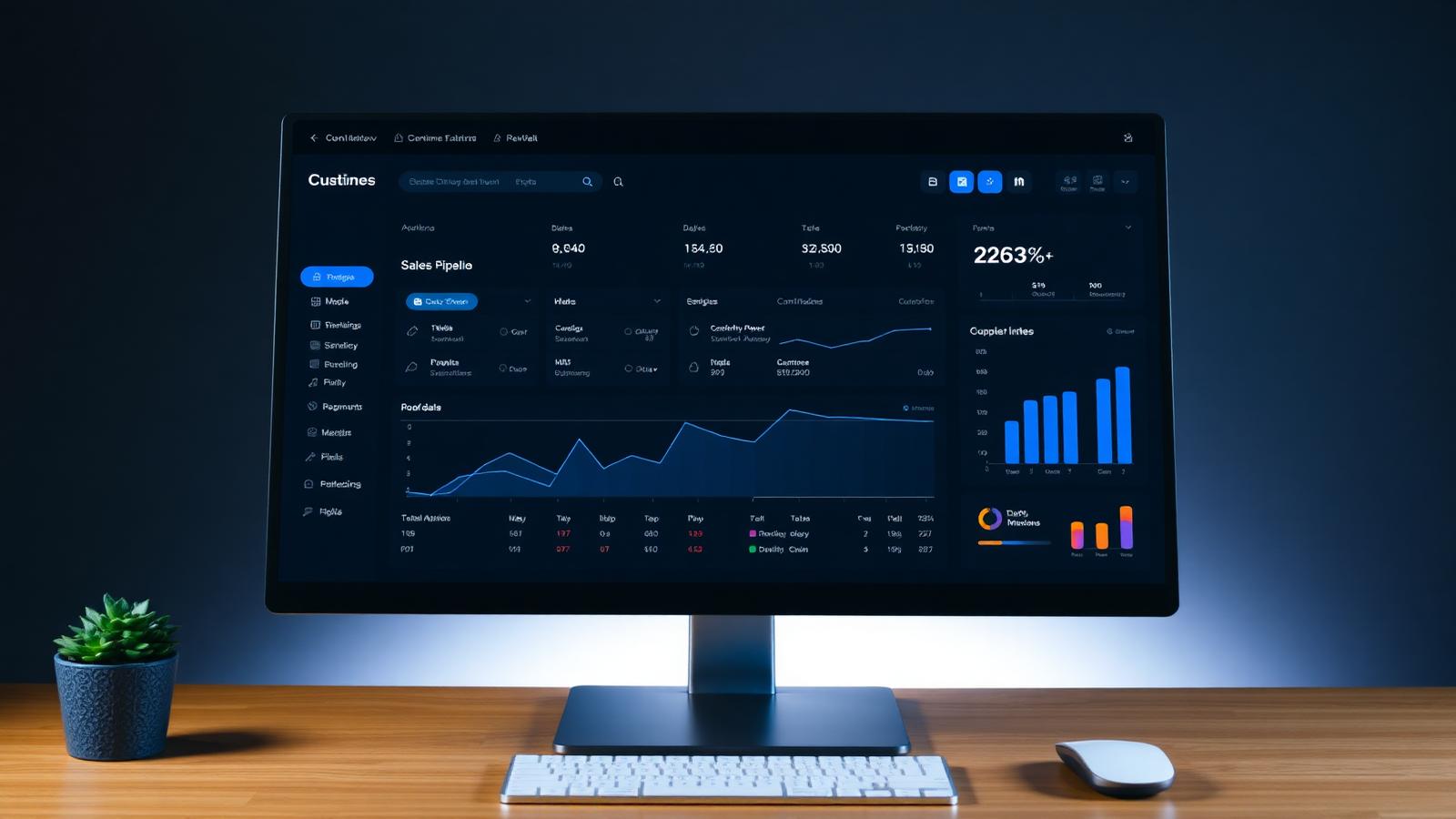
AI now scores leads, drafts follow-ups, summarises calls and predicts which deals will actually close. Reps spend more time on conversations and less time on data entry, and pipeline forecasts finally reflect reality instead of gut feel.
2. Marketing and Content
Generative AI accelerates briefs, copy, imagery and personalised journeys, while machine learning models handle segmentation, send-time optimisation and creative testing at a scale no team could match manually.
3. Customer Support
AI copilots handle tier-one questions instantly, draft responses for agents on complex tickets and summarise long conversations before escalation. Response times drop, and agents move up the value chain from typing to problem-solving.
4. Operations and Supply Chain
Demand forecasting, inventory optimisation, route planning and anomaly detection are all being rebuilt on machine learning. The gains are quiet but compounding, with less waste, fewer stockouts and shorter lead times.
5. Finance and Risk
AI reads invoices, reconciles ledgers, flags fraud patterns and answers ad-hoc questions against live financial data. Month-end close shortens, and finance teams move from reporting the past to advising on the future.
6. Product and Engineering
Code assistants, automated test generation, log analysis and AI-driven observability are reshaping how software gets built. A modern software company ships more with smaller teams, and quality goes up rather than down.
7. People and HR
Screening, scheduling, onboarding, internal knowledge search and performance summaries are all now AI-assisted. HR moves closer to strategy and further away from paperwork.
Business Examples
- Retail: AI-driven demand forecasting cuts overstock and dead inventory while personalised recommendations lift average order value.
- Restaurants and F&B: POS data feeds predictive models that plan staff rosters, prep quantities and promotions by day-part and location.
- Manufacturing: Vision models catch defects on the line and predictive-maintenance models flag machines before they fail.
- Healthcare: Assistants transcribe consultations, generate structured notes and surface relevant patient history to clinicians in seconds.
- Real Estate: AI qualifies leads, drafts listing copy and matches buyers to properties based on behaviour rather than filters alone.
- Logistics: Route optimisation and ETA prediction shave hours off delivery windows and reduce fuel cost per drop.
Benefits of Adopting AI
- Faster decisions backed by live business intelligence instead of week-old dashboards.
- Lower operating cost through workflow automation that removes repetitive human steps.
- Better customer experience with instant, context-aware responses and personalisation across channels.
- Higher revenue per employee as teams focus on judgement work and let AI handle the busywork.
- Stronger risk posture from continuous anomaly detection in payments, logins, contracts and network traffic.
- Compounding advantage. The longer AI runs on your data, the sharper its predictions become.
Challenges and How to Solve Them
AI programmes rarely fail because the model is wrong. They fail because the data is messy, the workflow is undefined or the change management is skipped. The good news is that every one of these challenges has a known playbook.
- Fragmented data. Consolidate customer, product and financial data into a warehouse or lakehouse before layering AI on top.
- Unclear ROI. Start with one workflow, define the metric and measure before and after. Expand only from proven wins.
- Privacy and compliance. Use retrieval on private data, enforce role-based access and prefer models that support data residency and audit logs.
- Hallucinations. Ground AI output in your own documents, add citations and keep a human in the loop for high-stakes decisions.
- Team resistance. Position AI as a copilot that removes drudgery, not a replacement. Train champions inside each department.
- Integration debt. Choose an API-first stack so new AI capabilities plug into existing CRM, ERP and support tools without a rewrite.
Real-World Use Cases
- AI sales assistant that logs calls, drafts follow-ups and suggests the next best action inside the CRM.
- Support copilot that answers customers from your knowledge base and escalates only what genuinely needs a human.
- Financial analyst chat that answers plain-English questions against live accounting and revenue data.
- Predictive inventory engine that forecasts demand by SKU, store and season to cut overstock.
- Document intelligence that reads contracts, invoices and forms and pushes structured data into your systems.
- Marketing personalisation that adapts email, on-site content and offers to each visitor in real time.
- Internal knowledge search that lets every employee ask a question and get an answer grounded in the company's own documents.
A Practical AI Adoption Roadmap
The businesses winning with AI are following a simple pattern. Pick one high-friction workflow, ship a small AI-assisted version in weeks, measure the impact honestly and use the win to fund the next one. A useful sequence for most companies looks like this.
- Audit. List the ten workflows that consume the most time or lose the most revenue today.
- Prioritise. Pick one with clean data, a clear metric and low regulatory risk.
- Prototype. Ship an AI-assisted version in four to six weeks, ideally alongside the existing process.
- Measure. Compare cycle time, cost and quality against the baseline.
- Scale. Roll out to the full team, then repeat the loop on the next workflow.
- Govern. Add access controls, audit logs and a lightweight AI policy as usage grows.
A capable technology company partner can compress this timeline significantly. If you would rather see how it plays out on real projects, our website development portfolio shows the kind of integrated products we ship for growing businesses.
Frequently Asked Questions
What is the difference between AI and business automation?
Traditional automation runs fixed rules. AI adds judgement, learning from data and adapting over time. In modern stacks the two work together, with AI making decisions and automation carrying them out across your systems.
Do small and mid-market businesses really benefit from AI?
Yes. Smaller teams often see faster gains because they can rewire a workflow end to end in weeks. Sales copilots, support assistants and forecasting models pay back quickly at almost any scale.
Is our data safe when we use AI?
It can be, if you design for it. Use enterprise-grade providers, keep private data inside your own retrieval layer, enforce role-based access and prefer regions and vendors that meet your compliance requirements.
Should we build our own AI models or use existing ones?
Most companies should start by using existing foundation models through APIs and focus on the workflow around them. Custom models make sense later, once you have data, volume and a specific problem general models cannot solve.
How do we choose the right AI development partner?
Look for a partner with production experience across data, integration and product, not just prompt engineering. A strong Pakistan software house or global technology company should be able to show shipped case studies, not only demos.
How long before we see ROI from AI?
Well-scoped pilots often show measurable ROI within one to three months. Enterprise-wide programmes take longer, but the compounding effect of cleaner data and automated workflows keeps returns growing year over year.
Conclusion
AI is not a single product you buy. It is a capability you build into how your business runs. The companies that will define the next decade are the ones treating AI as an everyday tool for sales, service, operations and product, not as a headline. Start small, stay close to real workflows, respect your data and your customers, and let the wins compound.
If you are planning your first serious AI initiative or want to move an existing pilot into production, our team can help you scope, build and operate AI software that fits your business.